
If your polymer clay feels like chewing gum, sticks to everything, or turns into a floppy mess the second you touch it, you’re not doing anything “wrong.”
You’ve just hit one of the most common beginner frustrations.
The good news is, this is very fixable. The better news is, once you understand why it’s happening, you’ll avoid it completely going forward.
First, let’s diagnose the problem
Polymer clay issues usually fall into one of three categories:
1. Too soft
- Won’t hold its shape
- Smears when you touch it
- Edges collapse or go wobbly
2. Too sticky
- Sticks to your hands, tools, or work surface
- Picks up fluff, dust, and every questionable life decision on your desk
- Leaves residue behind
3. Impossible to work with
- Either too soft or weirdly inconsistent
- Tears, stretches, or just refuses to behave
Now let’s fix it.

The real reasons this happens
You’re using a soft clay brand (or mixing unknowingly)
Some polymer clay brands are naturally softer. Great for kids. Not always great for detail.
If your clay feels like it melts the second you touch it, that’s likely the issue.
👉 Fix:
- Mix it with a firmer clay
- Or let it sit for a bit before using (more on that below)
Your hands are warming it up too much
Polymer clay softens with heat. And unfortunately, your hands are basically portable heaters.
If you’re conditioning it for ages or overhandling it, it will turn into a sticky mess.
👉 Fix:
- Work in shorter bursts
- Let the clay rest for 5 to 10 minutes
- If it’s really bad, pop it in the fridge for a few minutes
You’ve over-conditioned it
Yes, that’s a thing.
Conditioning is good. Over-conditioning turns your clay into something that behaves like frosting instead of… well, clay.
👉 Fix:
- Stop kneading once it’s smooth
- If it’s already too soft, you can firm it back up (next section)
Your environment is working against you
Warm room, direct sunlight, hot hands, summer in Australia… it all adds up.
👉 Fix:
- Work in a cooler space
- Avoid direct sunlight
- Use a tile or glass surface instead of wood
You’re working on the wrong surface
Some surfaces make stickiness worse.
👉 Fix:
- Best options: ceramic tile, glass, baking paper
- Avoid: raw wood, textured plastic, anything slightly porous

How to fix soft or sticky clay immediately
This is the part you actually care about.
1. Let it rest (simple but underrated)
Roll your clay into a ball and leave it alone for 10 to 20 minutes.
It will firm up naturally as it cools.
2. Leach out excess plasticiser
If your clay is really soft, this is the fix.
👉 How to do it:
- Flatten the clay
- Place it between two sheets of plain paper
- Leave it for 30 minutes to a few hours
The paper absorbs excess oils, making the clay firmer and easier to control.
3. Chill it (quick fix)
Pop your clay in the fridge for 5 to 10 minutes.
Not the freezer, you’re making jewellery, not preserving leftovers.
4. Dust lightly if needed
If it’s sticking while you work:
- Use a tiny amount of cornflour or baby powder
- Apply lightly, not like you’re seasoning chips
5. Stop touching it so much
This one’s blunt, but accurate.
The more you handle it, the worse it gets.
👉 Work smarter:
- Shape it, then leave it
- Use tools where possible
- Don’t keep reworking the same piece
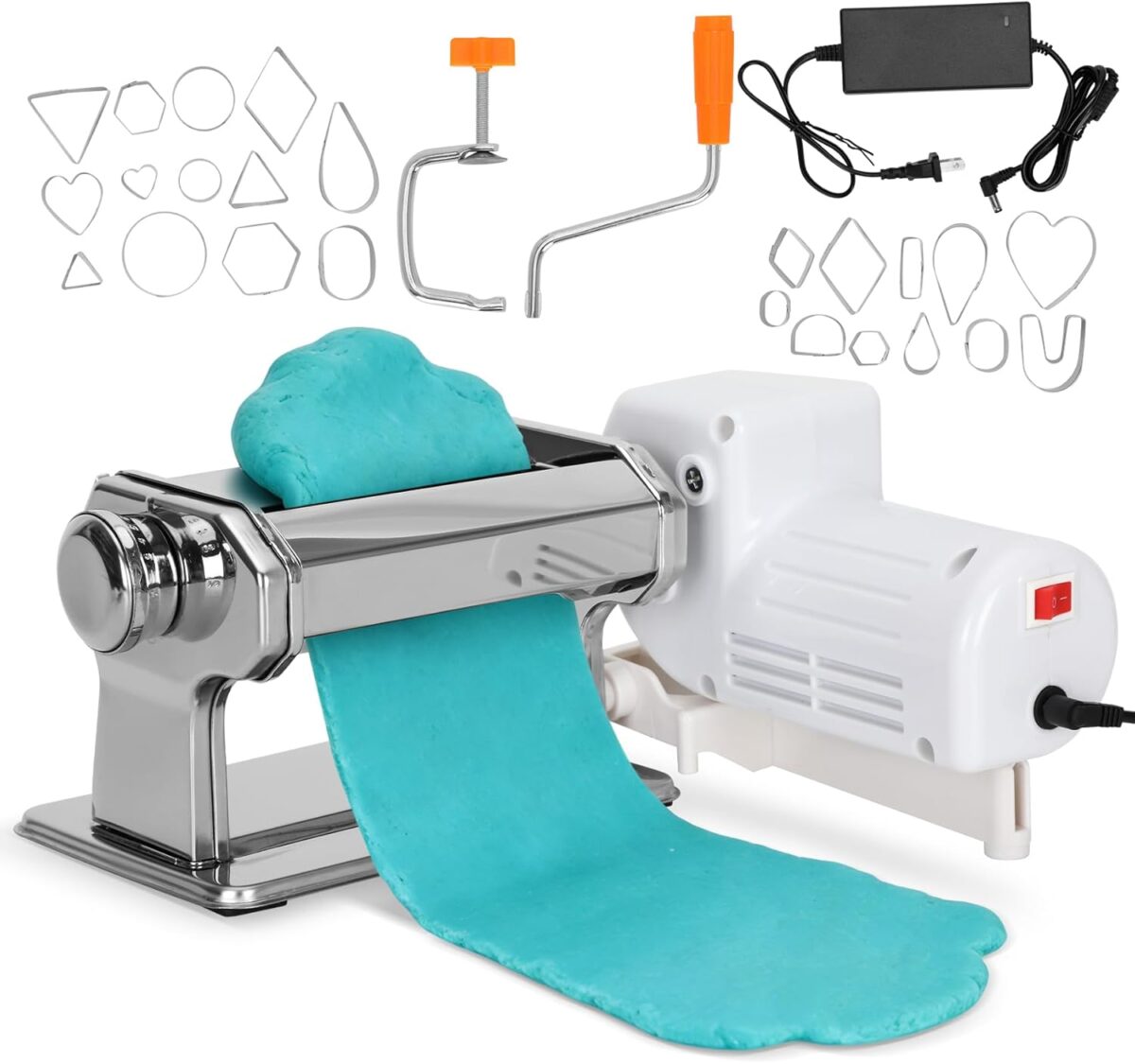
If I was starting out new
I'd be all over this machine. I purchased a motor for around $250 for my Atlas and the motor lasted all of 2 months. With this you get the pasta machine and the motor for $79US. The reviews are good too plus it has 9 thickness levels up to 3mm.
Bonus: how to prevent it next time
Once you fix it, here’s how to avoid the issue entirely:
- Don’t over-condition
- Work in a cool space
- Use a proper surface
- Mix soft clay with firmer clay if needed
- Take breaks instead of fighting the clay
The bottom line
If your polymer clay is too soft or sticky, it’s not a skill issue.
It’s usually:
- Temperature
- Overworking
- Or the clay itself
Fix those, and suddenly everything becomes easier, cleaner, and far less rage-inducing.
What to try next
Once your clay is behaving again, this is the perfect time to experiment with simple techniques that don’t require perfect control.
Start here:
👉 The easiest ways to add texture (even with random household items)